Guides · Operations · 5 min read
Why customers ask "is mine ready?" and what it costs
They aren't being impatient. Asking is the only way they have of finding out. Here is what the question does to a counter, and the four ways shops answer it.
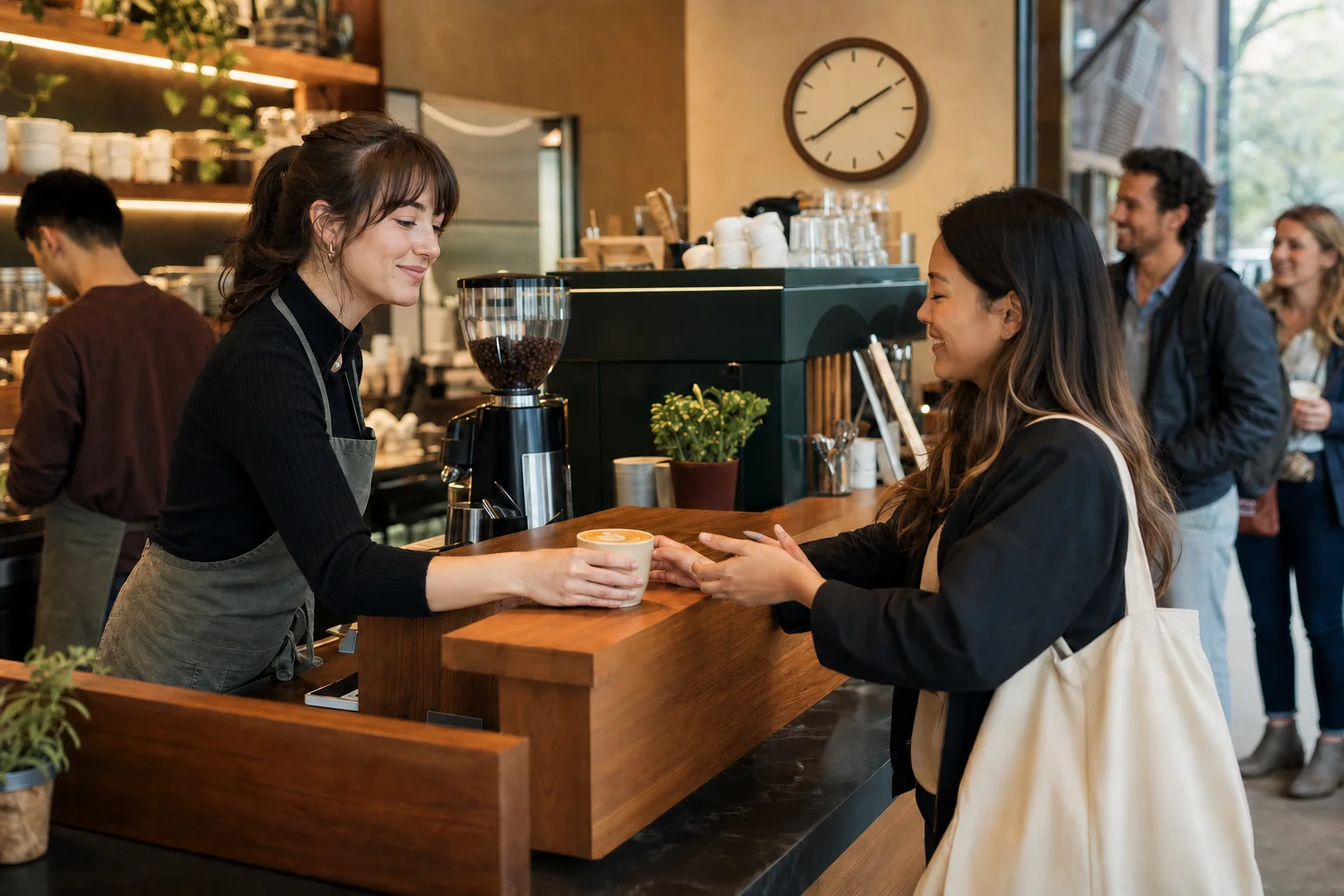
The question is a symptom
A customer who has paid has exactly one piece of information: they ordered. They don't know if it's been started, if it's next, or if it's sitting on the ledge under someone else's cup. Nothing in the room tells them. So they ask the only person who knows, and that person is holding a steam wand.
Now multiply that by a Saturday. The same barista answers the same question forty times, each answer takes six seconds and a glance at the ticket rail, and each glance is a drink that isn't being made.
Three costs, none of them on a receipt
The walk-away is the expensive one. A shop with a $6 average ticket loses more in one walk-away a day than most fixes cost in a month.
Four ways shops answer it
Shouting the name. Free and universal. Fails over the grinder, fails for the customer who stepped outside, fails twice as often on a busy day. The board doesn't replace it; it backs it up.
Pagers. A few hundred dollars up front, then replacements as they walk off. They tell one person, silently, and the room still can't see the queue. They also add a step at the register.
Text when ready. Good for the customer who left. Needs a phone number from everyone, costs per message, and does nothing for the eight people standing at the counter looking at their phones anyway.
A screen the whole room can see. Names or numbers under Making and Ready, on a TV near the handoff. It answers the question for everyone at once, before they ask. Staff do one tap. This is what Pickup Signal is, and the comparison pages lay out the others.
How to tell if it worked
Ask your Saturday closer how many times someone asked them if an order was ready. Then ask again two Saturdays after the screen goes up. If the number didn't drop, take the screen down.
More guides: Guides · How to set up an order-ready TV in a coffee shop · What is an order ready screen?